

Sheikh Hamdan reviews Uber’s AED184 million plan to expand autonomous travel in Dubai
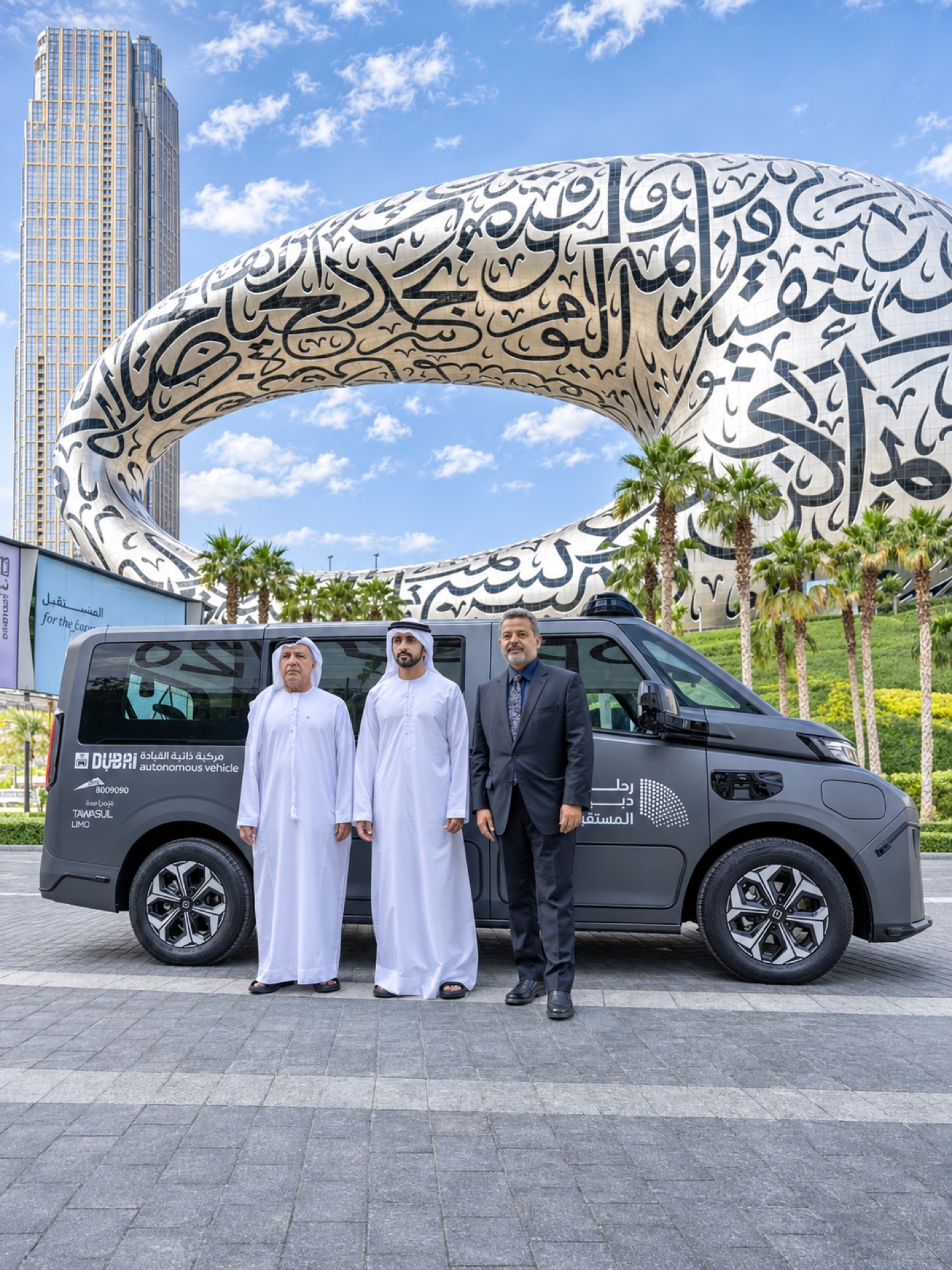
Uber plans to invest approximately AED184 million ($50 million) over the next two years to expand autonomous mobility in Dubai. Sheikh Hamdan bin Mohammed bin Rashid Al Maktoum, Crown Prince of Dubai, was briefed on the proposal during Dubai Future Week 2026.
The planned funding will support wider service coverage, operational infrastructure and partnerships with autonomous-driving technology companies, with a significant expansion of commercial operations envisaged by the end of 2027.
More connections across Dubai
The next phase includes door-to-door autonomous journeys within designated service areas in Jumeirah and Umm Suqeim. Passengers would be able to travel between locations without using fixed pick-up and drop-off stations, including trips between Kite Beach and Madinat Jumeirah.
Uber also plans to extend services to Downtown Dubai, Dubai International Financial Centre and Business Bay. Vehicles introduced in these districts will initially carry an onboard specialist to monitor operations, allowing the expansion to proceed in stages.
Building on services already operating
The proposal builds on autonomous services introduced earlier this year. On March 31, Uber and WeRide launched fare-charging robotaxi operations without an onboard vehicle operator in Jumeirah and Umm Suqeim, following a supervised trial that began in December 2025.
That launch was delivered in partnership with Dubai’s Roads and Transport Authority. Tawasul was appointed to provide fleet management for WeRide vehicles on the Uber platform, illustrating the combination of technology, booking services and local operations behind each journey.
Another addition followed on August 20, when Baidu’s fully driverless Apollo Go vehicles became available through Uber in selected locations in the same coastal districts. Dubai was the first market to bring that partnership into operation.
The different stages matter for passengers: existing driverless services and the newly announced expansion cover specific operating areas, with further locations forming part of the development plan.
Developing a network with several partners
Uber’s Dubai operations bring together more than one autonomous technology provider. At Apollo Go’s launch, the company described the city as the first place where its approach involving multiple autonomous partners had reached public roads.
Apollo Go uses Baidu’s fully electric RT6 robotaxi, a vehicle designed for driverless operation. New Horizon Luxury Transport serves as its fleet operator, while WeRide’s service has its own operational partnership.
Uber describes its wider ambition as a hybrid network in which autonomous vehicles and human drivers operate alongside one another. Expanding that network involves coordinating technology providers and fleet operators as well as connecting vehicles with passengers through the app.
Part of Dubai’s longer-term transport ambitions
The investment plan aligns with Dubai’s target of making 25% of all transportation journeys autonomous by 2030. That remains a citywide objective, with the commercial services introduced so far representing steps towards it.
The briefing took place against the wider programme of Dubai Future Week, running from November 18 to 21 at Emirates Towers and the Museum of the Future. The event brings together discussions, exhibitions, investment pitches and public experiences exploring how emerging technologies could influence daily life.
Its programme includes conversations about future cities alongside opportunities to explore new ideas through demonstrations and workshops. Uber is among the event’s concept partners, placing its mobility plans within that broader discussion about how Dubai will live, work and travel.