



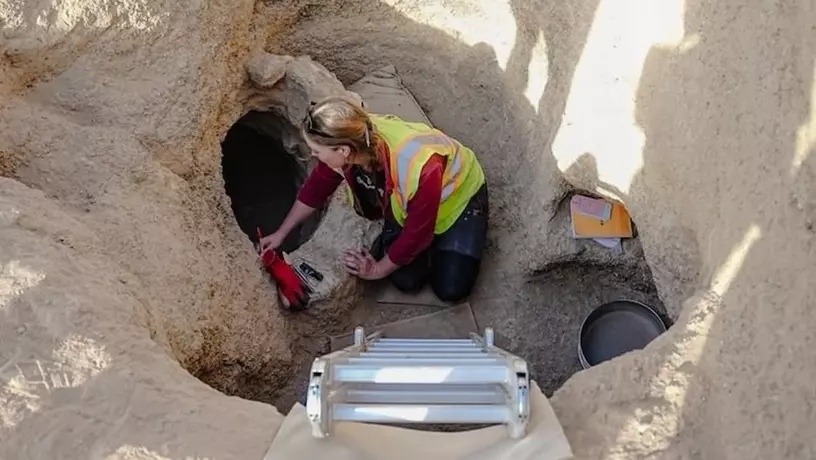
Ancient Iron Age Necropolis Discovered in Abu Dhabi
The Department of Culture and Tourism – Abu Dhabi (DCT Abu Dhabi) has announced the discovery of the largest Iron Age necropolis ever found in the United Arab Emirates, dating back approximately 3,000 years (800 BCE – 1 CE).
Located in the Al Ain region, the archaeological site contains over 100 tombs, many of which held a variety of funerary offerings. Officials stated that the find sheds new light on a previously unknown chapter of the region’s history and provides fresh insights into the country’s cultural heritage.
“For years, the burial traditions of the Iron Age remained a mystery. Now, we are closer to understanding the lives and customs of the people who inhabited this land three millennia ago,” said Jabir Al Merri, Director of the Historic Environment Department at DCT Abu Dhabi.
The cemetery consists of chambered tombs built using an intricate technique: a two-meter-deep vertical shaft was dug first, followed by an oval-shaped side chamber where the deceased and grave goods were placed. The entrance was then sealed with bricks or stones, and the shaft was filled in. The absence of any surface markers explains why these tombs remained hidden for centuries. Archaeologists noted that all the burials had been looted in ancient times.
Despite this, researchers uncovered fragments of gold jewelry and numerous valuable artifacts, including finely crafted pottery, soft stone vessels, bronze weapons, spearheads, and arrowheads. Personal items such as mirrors, razors, ornaments, and shell-shaped cosmetic containers were also found.
Of particular significance are the remains of wooden weapon components and possible quiver fragments—extremely rare discoveries for this region. Fragile human remains were also preserved at the site.
The necropolis was uncovered as part of the “Funerary Landscapes of Al Ain” project, launched in 2024 to study the UNESCO World Heritage Site. Beyond its archaeological importance, the discovery highlights the role of the Iron Age in shaping Al Ain’s unique oasis landscape. It was during this period that the falaj system—an underground aqueduct critical for irrigation and agriculture—was developed, laying the foundation for the UAE’s early settlements.
Source: Arabian Business