
Dubai International Airport Soars to Record Half-Year Passenger High
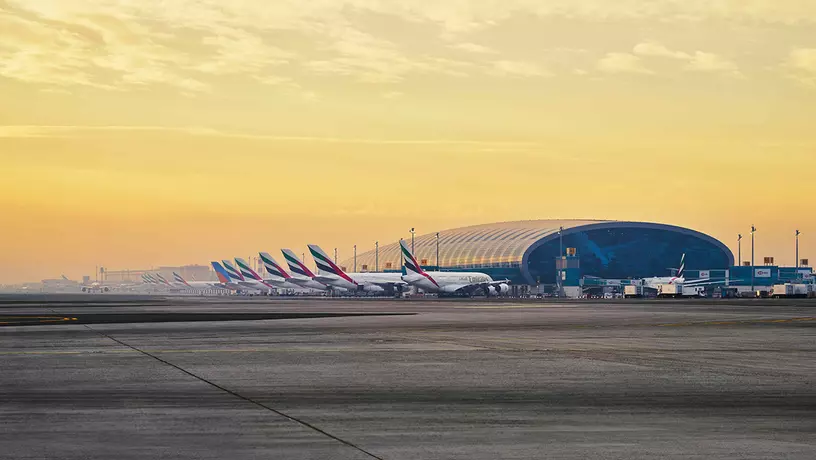
Dubai International Airport (DXB) has cemented its status as the world’s busiest international hub by setting a new historic record in the first half of 2025. The airport welcomed a staggering 46 million passengers between January and June, marking its highest-ever half-year traffic figure.
This achievement represents a solid 2.3% increase compared to the same period in 2024. The growth is particularly notable as it occurred despite temporary airspace restrictions affecting the region during May and June. The second quarter of 2025 alone saw 22.5 million passengers pass through DXB, a 3.1% rise year-on-year.
April emerged as the busiest month within the quarter and set its own record, handling 8 million passengers. Airport authorities anticipate another significant surge in traffic during the second half of the year, driven by major upcoming events spanning sports, business, and entertainment sectors. A key highlight will be the Dubai Airshow 2025 in November.
Buoyed by this strong start, DXB is projecting a total annual passenger traffic figure approaching 96 million by the end of 2025. This would bring the airport tantalizingly close to the landmark threshold of 100 million passengers in a single year.
Key operational statistics further illustrate the scale: DXB averaged 7.7 million passengers monthly and up to 254,000 daily during the first six months. January stood out as the single busiest month, processing 8.5 million passengers. Over 222,000 flight movements were recorded with an average seat load factor of 76%.
India retained its position as the top destination country by passenger volume (5.9 million), followed by Saudi Arabia (3.6 million), the UK (3.0 million), Pakistan (2.1 million), and the USA (1.6 million). London remained the leading destination city (1.8 million passengers), with Riyadh (1.5 million), Mumbai (1.2 million), Jeddah and New Delhi (both 1.1 million), and Istanbul (982,000) rounding out the top connected cities.
Source: Arabian Business