10 people sharing Dubai Real Estate
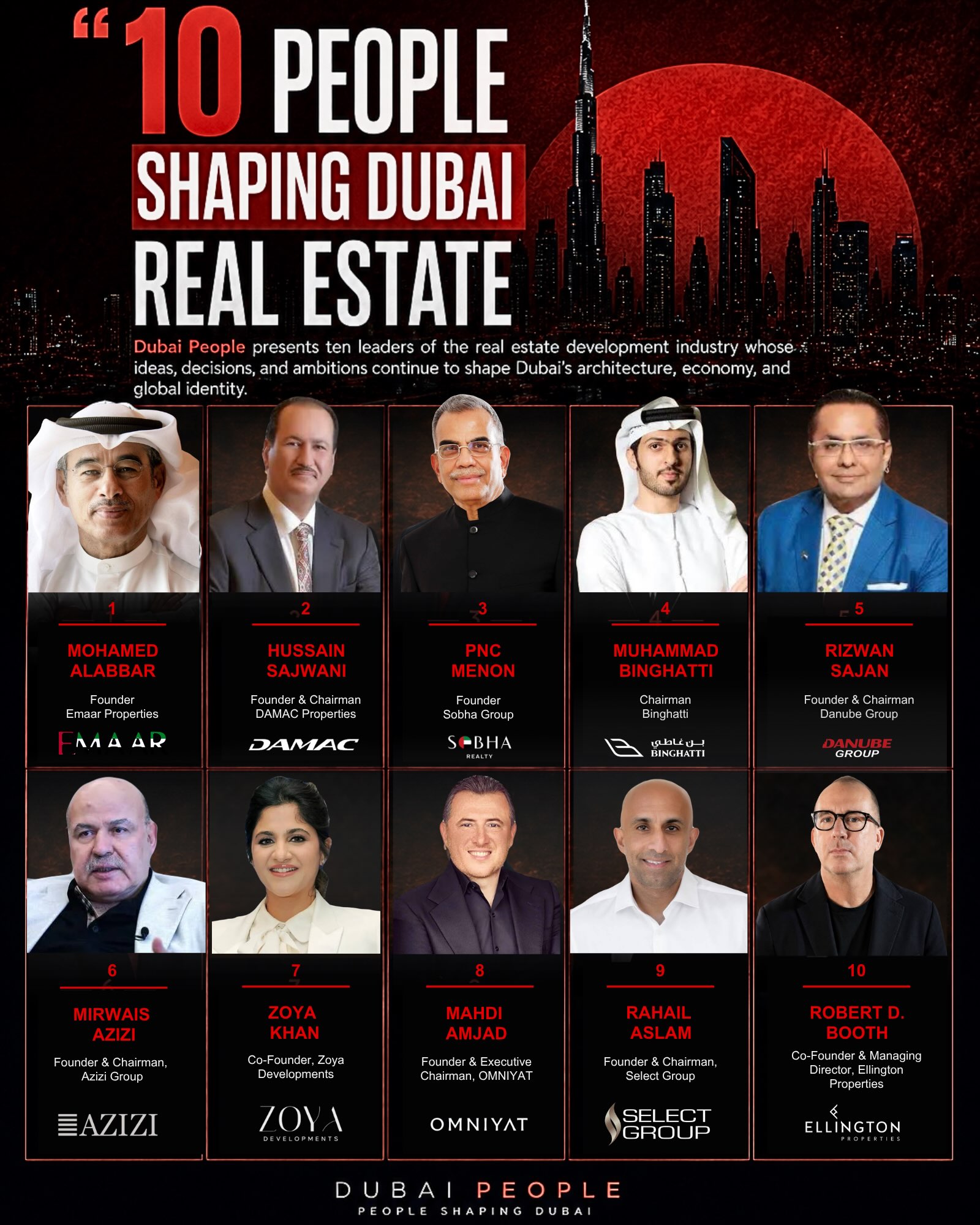
10 PEOPLE SHAPING DUBAI REAL ESTATE
The Visionaries Building the City of Tomorrow
Dubai People presents ten leaders of the real estate development industry whose ideas, decisions, and ambitions continue to shape Dubai’s architecture, economy, and global identity.
Some cities evolve gradually. Dubai is different — it seems to be constantly designing its own future. Over just a few decades, entire districts known around the world have emerged here, alongside architectural landmarks of global significance and an entirely new culture of urban living. Real estate has become more than one of the emirate’s key economic sectors — it is now an essential part of Dubai’s international identity.
But skylines do not create themselves. Behind every new tower, every master community, and every emerging district are people. People capable of looking at an empty piece of land and seeing its future. People making decisions worth billions of dirhams long before the first foundation is laid. People bringing together capital, architecture, technology, design, marketing, and an understanding of how future generations will live.
This is why Dubai People looks at real estate first and foremost through the people behind it. This is not a ranking based simply on square metres built, nor an attempt to identify the largest developer solely by sales volume. Scale matters. But influence cannot be measured by numbers alone.
We look at the people behind the companies: their entrepreneurial journeys, philosophies, projects, and ideas that are gradually becoming part of Dubai itself. From creating entire districts to ultra-prime residences. From accessible housing to branded residences. From architectural design to building international development brands.
These are ten different models of leadership. And ten people building Dubai in their own way.
1. MOHAMED ALABBAR
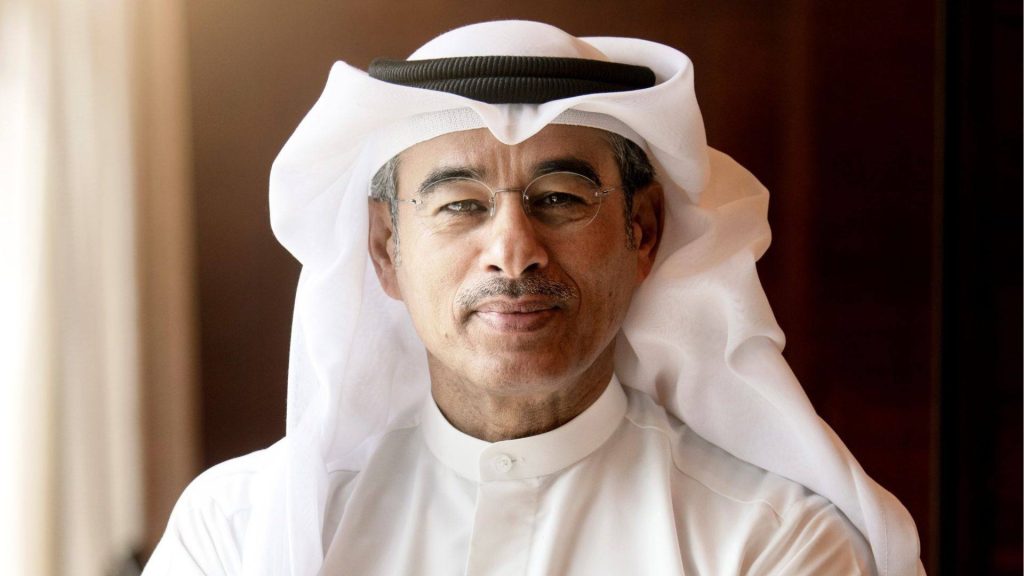
Founder, Emaar Properties
If the story of modern Dubai were to be told through the work of a single developer, the name Mohamed Alabbar would inevitably stand at the centre of it. The founder of Emaar Properties belongs to a generation of entrepreneurs who did more than develop real estate — they helped create the international image of Dubai itself.
Burj Khalifa. Downtown Dubai. Dubai Mall. Dubai Marina. Arabian Ranches. Dubai Hills Estate. Dubai Creek Harbour. Each exists on its own scale, but together they demonstrate the defining characteristic of Alabbar’s approach: development is not about creating an individual building. It is about creating an entire urban environment.
Before his entrepreneurial career, Alabbar served as Director General of the Dubai Department of Economic Development. Emaar would later grow into an international business spanning real estate, hospitality, retail, and other sectors. Yet Alabbar’s most visible legacy remains in Dubai.
Burj Khalifa became a global symbol of the city. Downtown Dubai evolved into one of the world’s most recognisable urban destinations. Dubai Mall helped redefine the concept of a shopping centre, transforming retail into part of a much larger destination economy.
This represents a fundamental distinction in Emaar’s philosophy. The company does not simply sell real estate. It creates destinations. Within Emaar developments, residential property becomes part of a larger ecosystem: restaurants, hotels, parks, public spaces, retail, entertainment, and infrastructure combine to create a complete environment.
Development becomes a tool for shaping a way of life. This is why Mohamed Alabbar’s influence cannot be measured purely through Emaar’s financial performance. Many of the company’s projects have become part of Dubai’s visual language.
Dubai People Perspective:
Mohamed Alabbar represents development as city-making. His defining achievement is the ability to create places that eventually become symbols of the city in their own right.
2. HUSSAIN SAJWANI
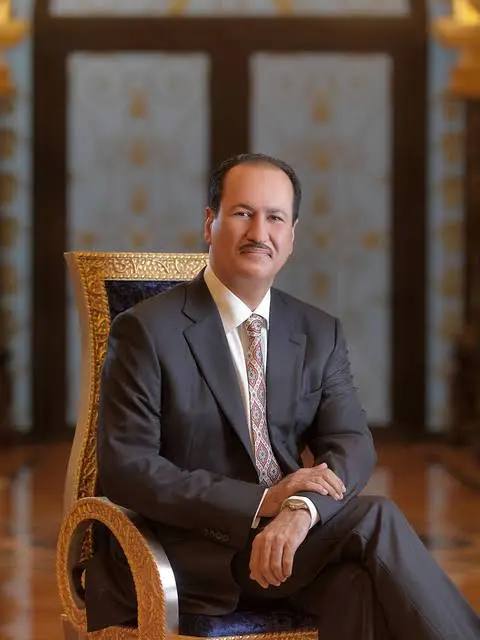
Founder & Chairman, DAMAC Properties
If Emaar is closely associated with the creation of major urban destinations, Hussain Sajwani built another powerful model: real estate as a global luxury brand. The founder of DAMAC Properties began his entrepreneurial journey long before entering real estate. His early business interests were in catering and food services, before he founded DAMAC Properties in 2002 after recognising the opportunities emerging from Dubai’s rapidly evolving property market.
The following two decades made Sajwani one of the Middle East’s most recognisable entrepreneurs. DAMAC did not simply build homes. The company consistently connected property with fashion, hospitality, and the global luxury industry. Names including Cavalli, de GRISOGONO, and Paramount have appeared across DAMAC developments.
This strategy proved significant beyond the company itself. It became part of a much broader movement that helped establish branded real estate as one of the most visible segments of Dubai’s luxury property market.
Sajwani understood early on a fundamental characteristic of the upper end of the market: an affluent buyer is not simply purchasing square metres. They are buying access to a particular world. Architecture becomes part of the brand. The brand becomes part of the lifestyle. And lifestyle becomes part of the property’s value.
At the same time, DAMAC’s scale has expanded far beyond individual towers. The company develops major master communities and has extended its ambitions beyond the UAE. Sajwani himself remains one of the region’s most public business figures — an entrepreneur for whom international relationships, marketing, and ambition are all elements of one broader strategy.
Dubai People Perspective:
Hussain Sajwani demonstrated that a developer can think like the creator of a global luxury brand. He transformed property into a product where architecture, identity, marketing, and lifestyle work as one.
3. PNC MENON
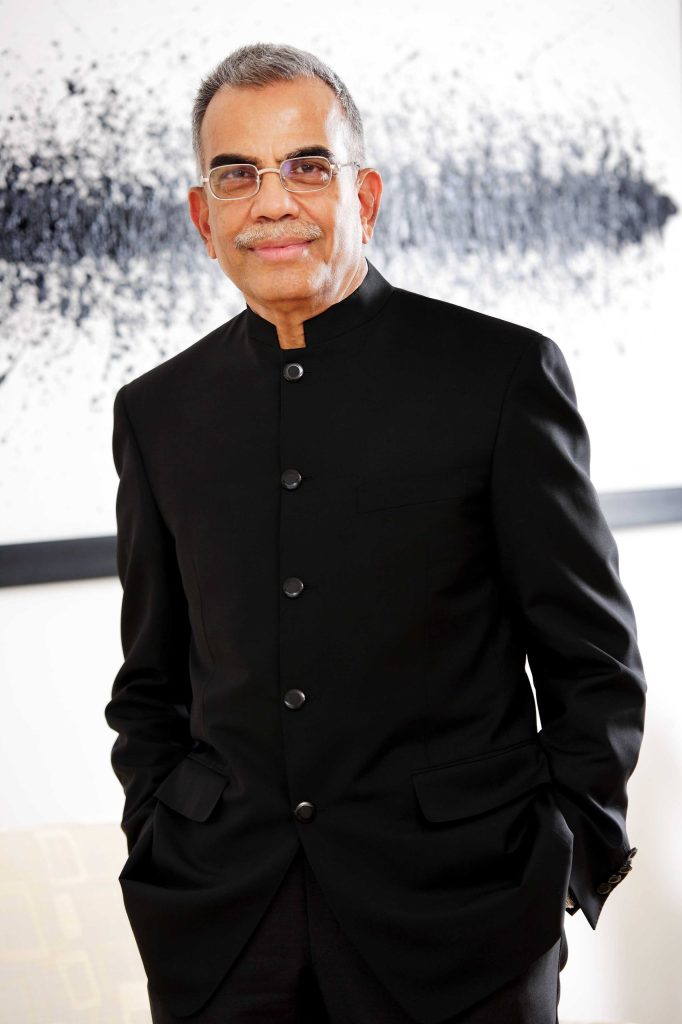
Founder, Sobha Group
PNC Menon’s story is one of the most distinctive in the region’s development industry. His journey did not begin with enormous land banks or skyscrapers.
In 1976, Menon established an interior decoration company in Oman. Working with interiors, craftsmanship, and attention to detail gradually shaped the philosophy that decades later would become fundamental to Sobha. The company worked on prestigious projects for royal families across the region before Menon eventually expanded into large-scale property development.
Yet even as the business grew, one principle remained unchanged: control over quality. This is particularly significant in real estate. Most developers inevitably rely on vast networks of contractors, suppliers, and consultants. Sobha became known for an approach in which a significant part of the development process is controlled within its own ecosystem.
This vertical integration allows the company to maintain close oversight of construction, materials, details, and the quality of the final product. In Dubai, Sobha became particularly prominent through large residential communities including Sobha Hartland and Sobha Hartland II.
Menon’s philosophy is clearly visible here: luxury is not defined by an expensive façade alone. Real luxury is found in how a door is made. How a space feels. How a floor plan functions. Which materials are used. And whether the finished product lives up to the original promise.
In a city where architectural spectacle can often become the primary instrument for attracting attention, Sobha proposes another formula: craftsmanship.
Dubai People Perspective:
PNC Menon represents a school of development where quality begins long before the marketing campaign. His influence lies in an exceptional focus on execution — a principle that has helped make Sobha one of Dubai’s most recognisable premium development brands.
4. MUHAMMAD BINGHATTI
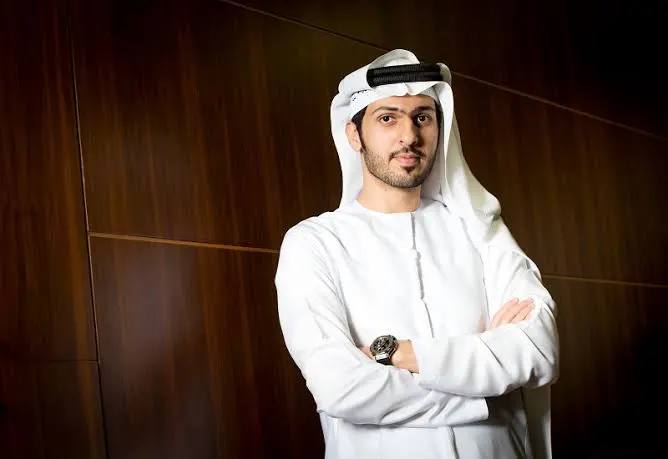
Chairman, Binghatti
Few Dubai developers have transformed their global perception as rapidly in recent years as Binghatti. Muhammad Binghatti has been central to that transformation.
The company has placed architectural recognition and the concept of “hyper-properties” at the heart of its strategy — developments designed to function almost as luxury brands in their own right. International attention around Binghatti accelerated dramatically through a series of partnerships with names traditionally associated with automobiles, watches, and luxury goods rather than real estate.
Bugatti Residences by Binghatti. Mercedes-Benz Places. Burj Binghatti Jacob & Co Residences.
This goes beyond simply placing a famous logo on a development. It is an attempt to translate the philosophy of a luxury brand directly into architecture. What should a Bugatti residence look and feel like? How can the philosophy of Mercedes-Benz be expressed through a skyscraper? How can the aesthetics of haute horlogerie become a residential experience?
It is at the intersection of these questions that Binghatti has established its own territory. As a result, Muhammad Binghatti represents a new generation of Dubai developers — one equally comfortable thinking in terms of property, design, luxury branding, and global attention.
Buildings become content. Architecture becomes media. And the launch of a new development begins to resemble the unveiling of a global luxury product.
Dubai People Perspective:
Muhammad Binghatti is one of the most visible representatives of Dubai’s new development era. His approach demonstrates how closely architecture, luxury branding, and global collaboration can now coexist.
5. RIZWAN SAJAN
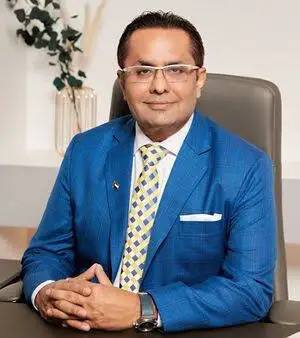
Founder & Chairman, Danube Group
Rizwan Sajan’s story is, above all, an entrepreneurial one. Before the towers of Danube Properties came the building materials business. Sajan established Danube Group in Dubai in 1993, with the property development division arriving much later.
That journey explains much about the company’s philosophy. Sajan understood the construction market long before becoming a developer himself. But Danube’s real distinction came from its ability to understand the broader property buyer.
Rather than focusing exclusively on ultra-prime real estate, the company made affordable luxury one of its central ideas — offering buyers the feeling and amenities of a premium product at a more accessible entry point. Flexible payment structures became another important part of the model.
Danube actively developed mechanisms designed to make purchasing Dubai property financially and psychologically more accessible to a broader international audience. This is where Sajan’s strength as an entrepreneur becomes particularly visible: his ability to see the market through the customer’s eyes.
Not simply: What can we build? But: Who will buy it? Why will they buy it? How can the purchasing process become easier? How do we communicate the product to an international audience?
Sajan has also consistently understood the importance of marketing in Danube’s growth. The combination of product, accessibility, visibility, and entrepreneurial energy has allowed the company to carve out its own position in an exceptionally competitive market.
Dubai People Perspective:
Rizwan Sajan demonstrates how a deep understanding of the customer can become a development strategy. Danube grew around the idea of making the Dubai property proposition accessible to a wider group of buyers without abandoning the aspirational lifestyle associated with the city.
6. MIRWAIS AZIZI
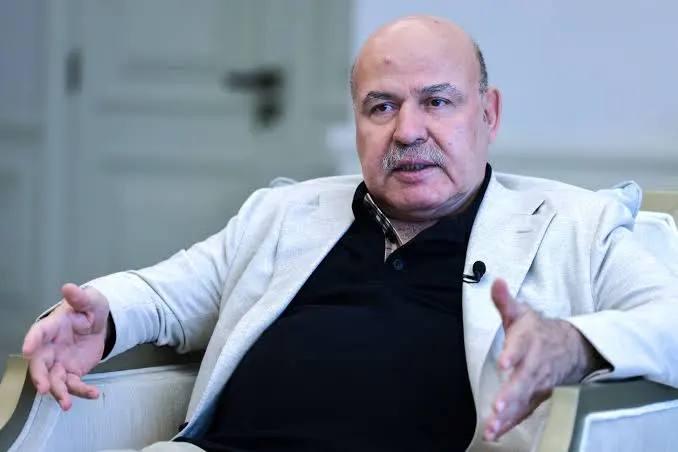
Founder & Chairman, Azizi Group
Some entrepreneurs build companies around one headline-making project. Mirwais Azizi has been building businesses for decades.
The founder and chairman of Azizi Group established his business in 1989, and today Azizi Developments has become one of Dubai’s most prominent private developers. The company operates across several important locations in the city and maintains a substantial portfolio of residential and mixed-use developments.
But what is particularly revealing is the evolution of Azizi’s ambitions. The company has gradually moved from residential projects toward developments capable of influencing the skyline itself.
The clearest example is Burj Azizi, the megatall tower on Sheikh Zayed Road conceived as one of Dubai’s new architectural landmarks. For an entrepreneur, this represents a fundamental transition.
Building another residential project is business. Creating an architectural landmark is a statement about where a company intends to stand in the history of a city.
It is this transition that makes Mirwais Azizi’s story particularly interesting today. He represents the kind of entrepreneur for whom Dubai became a platform for long-term growth. The company did not stop after a single market cycle; it continued increasing both the scale and complexity of its ambitions.
In that sense, the Azizi story also reflects the story of Dubai itself: a constant movement from big to bigger.
Dubai People Perspective:
Mirwais Azizi represents the power of long-term entrepreneurial ambition. His company has evolved from a major private developer into a brand aspiring to create projects on an entirely new urban scale.
7. ZOYA KHAN
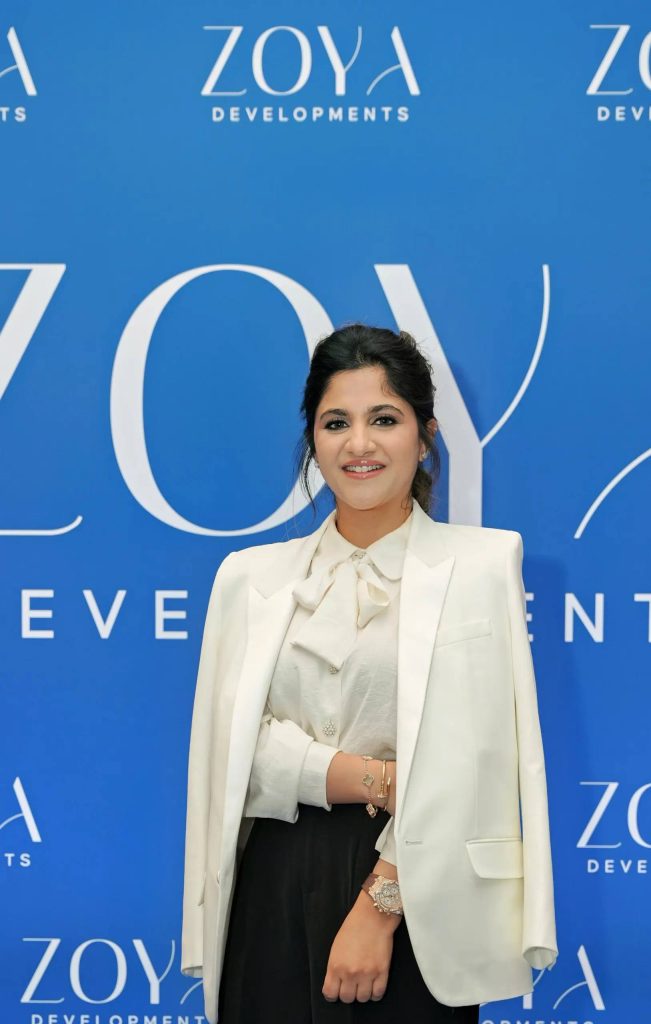
Co-Founder, Zoya Developments
A list of people shaping Dubai real estate today should not focus exclusively on those who have been building the city for the past twenty or thirty years. It is equally important to watch the new generation of developers entering the market now — at a moment when competition, buyer expectations, and international attention surrounding Dubai property have reached an entirely different level.
In our selection, this new wave is represented by Zoya Khan, Co-Founder of Zoya Developments. Zoya Developments entered the UAE market with an ambitious investment programme and is expanding its presence across several of Dubai’s developing areas.
Its areas of activity include Dubai South, Al Furjan, Dubai Land Residence Complex, Dubai Industrial City, and International City. Its focus on Dubai South is particularly significant.
The area is increasingly emerging as one of the city’s most closely watched growth corridors, supported by major infrastructure development surrounding Al Maktoum International Airport and the long-term expansion of southern Dubai. It is here that Zoya Developments has been steadily expanding its presence.
In 2026, the company introduced ÉLINOR by Zoya, another residential project in Dubai South, continuing to build its portfolio in the area.
Unlike companies whose histories already span decades, Zoya stands at a very different point in its journey. And that is precisely what makes its inclusion interesting. This is not the story of an empire already built. It is the story of a company in the process of growth.
Today’s property buyer has become considerably more demanding. It is no longer enough to simply construct a residential building in a strong location. Buyers assess architecture, layouts, amenities, public spaces, design, and the overall philosophy behind a project.
Zoya Developments communicates its identity through ideas of clarity, purpose, experience, and legacy — principles the company aims to translate into its approach to residential real estate.
For Zoya Khan, the challenge is to establish a recognisable development brand in a market already populated by some of the region’s most powerful names. That is a very different entrepreneurial challenge.
Alabbar, Sajwani, Menon, and other leaders on this list helped define earlier stages of Dubai’s development. The new generation must answer the next question: What should be built today to remain relevant in the Dubai of tomorrow?
This is why the story of Zoya Developments deserves attention now — while the company is still establishing its own position on the map of the city.
Dubai People Perspective:
Zoya Khan represents a new generation within Dubai’s development industry. Her story is compelling not because of decades of established legacy, but because of potential — the opportunity to watch a new brand develop its own architectural language and compete for a place in one of the world’s most dynamic real estate markets.
8. MAHDI AMJAD
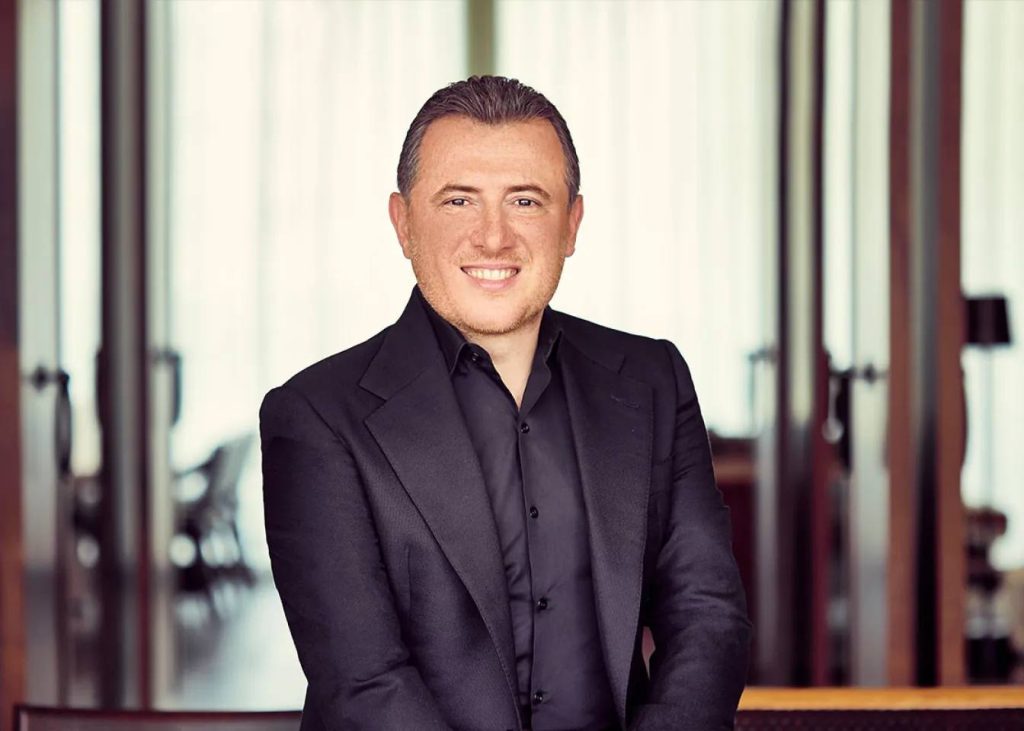
Founder & Executive Chairman, OMNIYAT
While most developers speak about property, Mahdi Amjad often speaks about it almost as if it were art. And that is more than a marketing phrase.
He founded OMNIYAT in 2005 around the idea of creating projects where architecture, design, location, and service become one complete object. Over two decades, that philosophy has taken the company into the highest segment of Dubai’s property market.
The Opus, designed by Zaha Hadid. One at Palm Jumeirah, Dorchester Collection. The Lana and The Residences, Dorchester Collection. AVA at Palm Jumeirah.
Here, property no longer competes solely with other property. It begins to compete with collectible design, yachts, art, and other categories of ultra-luxury.
OMNIYAT describes its philosophy as The Art of Elevation, a phrase that captures the company’s approach: working with leading architects, designers, and hospitality brands to create a limited number of exceptional properties.
In the ultra-prime market, scarcity can be more powerful than scale. Rarity can matter more than volume. And the story behind an asset can become almost as important as its size.
Mahdi Amjad understood this logic long before Dubai’s current luxury real estate boom. Today, OMNIYAT continues to expand its ambitions while retaining the central idea behind the brand — property should be experienced not merely as an asset, but as an object of exceptional quality.
Dubai People Perspective:
Mahdi Amjad approaches property as a collectible product. His influence is particularly visible in the way Dubai now competes for the global ultra-high-net-worth buyer not only through price and scale, but through architecture, service, and rarity.
9. RAHAIL ASLAM
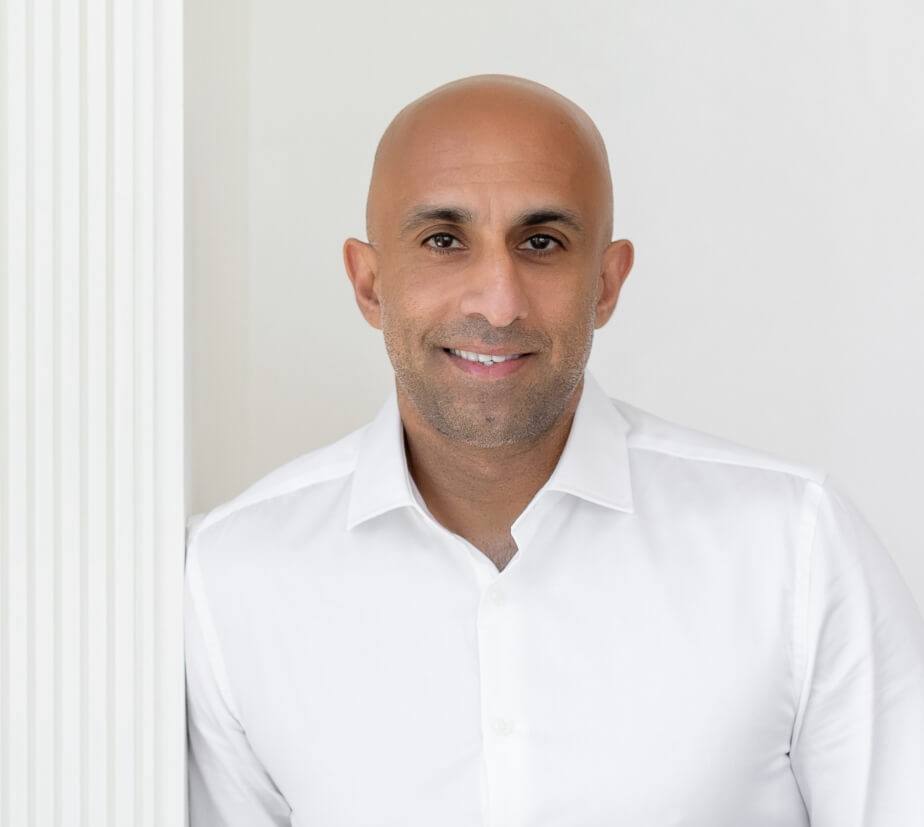
Founder & Chairman, Select Group
Rahail Aslam’s entrepreneurial story began long before real estate. He entered the technology business at a young age and later built a major IT hardware import and distribution operation across the United Kingdom and Europe.
In the early 2000s, Aslam founded Select Group in the UAE and began developing a property portfolio that would eventually extend well beyond a single market. Select Group has become particularly visible in premium waterfront development.
Dubai Marina emerged as one of the company’s key territories, although both the geography and scale of its projects have expanded considerably over time.
An important part of Aslam’s philosophy is the combination of development and investment thinking. That approach is visible in the structure of the group itself: Select does not look at real estate only as a product to be built and sold, but also as an asset.
An asset can be acquired. Managed. Repositioned. Developed. And enhanced in long-term value.
This approach requires a different kind of discipline. Rather than pursuing the maximum possible number of launches, a company can focus on location selection, asset quality, and long-term investment potential.
One of the most visible directions in Select Group’s evolution has been its work with global hospitality and wellness brands, particularly within the upper end of the market. Today, the group’s interests extend beyond residential development into hospitality, asset management, and international investment.
Dubai People Perspective:
Rahail Aslam represents an investment-led approach to development — quieter in appearance, perhaps, but built around capital discipline, asset selection, and long-term value.
10. ROBERT D. BOOTH
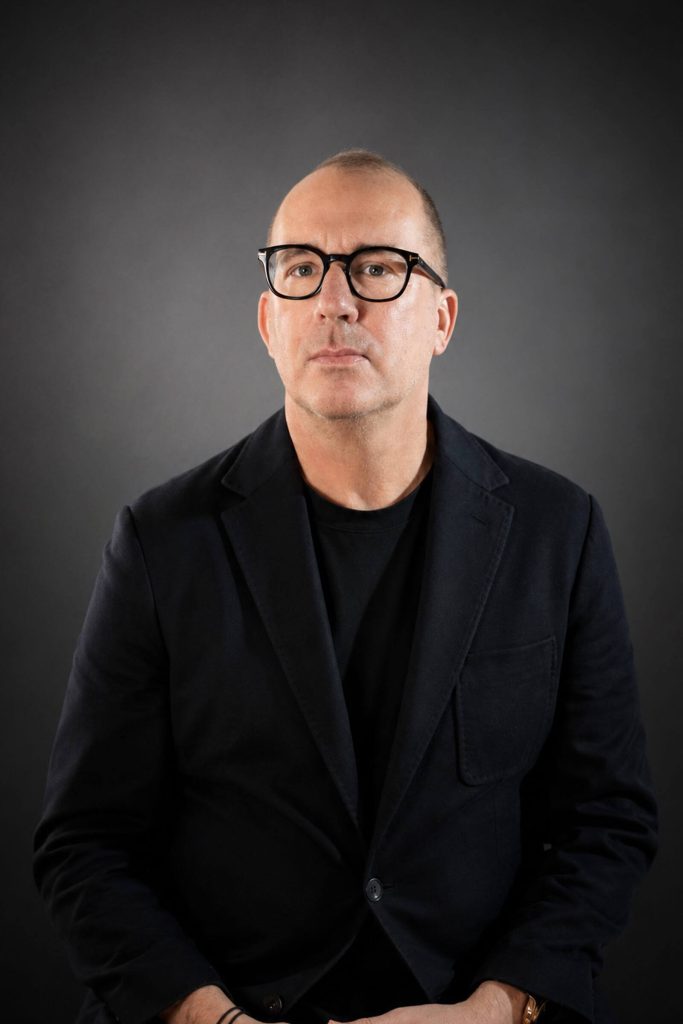
Co-Founder & Managing Director, Ellington Properties
Robert D. Booth has a unique perspective on Dubai’s evolution. Before establishing Ellington Properties, he held senior positions within Emaar’s real estate business and participated in the development of some of the city’s most recognisable communities.
In other words, Booth witnessed the creation of modern Dubai from within. Ellington, however, gave him an opportunity to apply that large-scale experience in a very different way.
Instead of megaprojects, the company made design-led development its central philosophy. Architecture. Interiors. Proportions. Materials. Landscaping. Shared spaces.
The focus shifts from the sheer size of a project to the quality of a person’s everyday interaction with the space. This reflects an important evolution in Dubai’s property market.
When the city was first establishing its international reputation, scale was often the primary argument: higher. bigger. faster.
Today, the market is considerably more mature. Buyers compare design. They study floor plans. They pay attention to materials. They want to understand the philosophy behind a brand.
It is within this more sophisticated environment that Ellington established its position as a design-led developer. Booth is particularly interesting because his career connects two eras of Dubai: the era of enormous master communities and the current era, in which the quality of the individual residential experience has become equally important.
Dubai People Perspective:
Robert D. Booth represents the maturity of Dubai’s property market. After participating in the development of large-scale projects across the city, he focused on another dimension of development — the human experience within architecture.
BUILDING MORE THAN BUILDINGS
What connects these ten people? At first glance, the answer is real estate. Look closer, however, and their approaches could hardly be more different.
Mohamed Alabbar thinks in urban destinations. Hussain Sajwani connects real estate with global luxury culture. PNC Menon builds his philosophy around quality and craftsmanship. Muhammad Binghatti transforms architecture into a recognisable brand. Rizwan Sajan expands access to the aspirational Dubai lifestyle.
Mirwais Azizi represents long-term scale and ambition. Zoya Khan represents a new generation of growing developers. Mahdi Amjad brings property closer to art and collectible luxury. Rahail Aslam combines development with investment discipline. Robert D. Booth places design and human experience at the centre of residential development.
Different strategies. Different generations. Different audiences. Different products.
Together, however, they demonstrate why Dubai real estate can no longer be viewed simply as a construction industry. It has become part of the city’s economy, global marketing, tourism, investment appeal, and international cultural identity.
Every new development ultimately answers the same question: What will the next Dubai look like?
THE PEOPLE BEHIND THE SKYLINE
There is something that distinguishes Dubai from many of the world’s mature capitals. Here, the history of the city is still being written in the present tense.
Many districts that now seem inseparable from Dubai did not exist a generation ago. And many of the districts that may define the city twenty years from now currently exist only in presentations, architectural models, and the imagination of their creators.
This gives developers an unusual responsibility. Their decisions remain part of the city for decades.
The advertising campaign ends. The sales team moves on to the next launch. But the building remains. The street remains. The district remains. A new fragment of the city remains — one that thousands of people may interact with every day.
That is why Dubai People looks at development first and foremost as a story about people. Because a skyline never appears by itself.
First comes an idea. Then comes the person willing to believe in it. Then come the team, the capital, the architecture, the engineering, thousands of decisions, and years of work. Only then does a new building appear on the horizon.
Behind every building is a vision. Behind every vision is a person. And behind the future of Dubai are the people willing to build it.