
UAE women leaders strengthen business ties across BRICS markets
A UAE delegation has joined government leaders, investors and entrepreneurs from across the BRICS economies in New Delhi, with a focus on creating new opportunities for women-led businesses, international investment and cross-border expansion.
The delegation participated in the BRICS Women-Led Development Summit 2026, organised by the BRICS Women’s Business Alliance under India’s BRICS Presidency.
For the UAE representatives, the central message was clear: women’s economic empowerment should move beyond representation and networking towards measurable business results, including investment, market access and companies expanding internationally.
UAE delegation brings together leaders from key industries
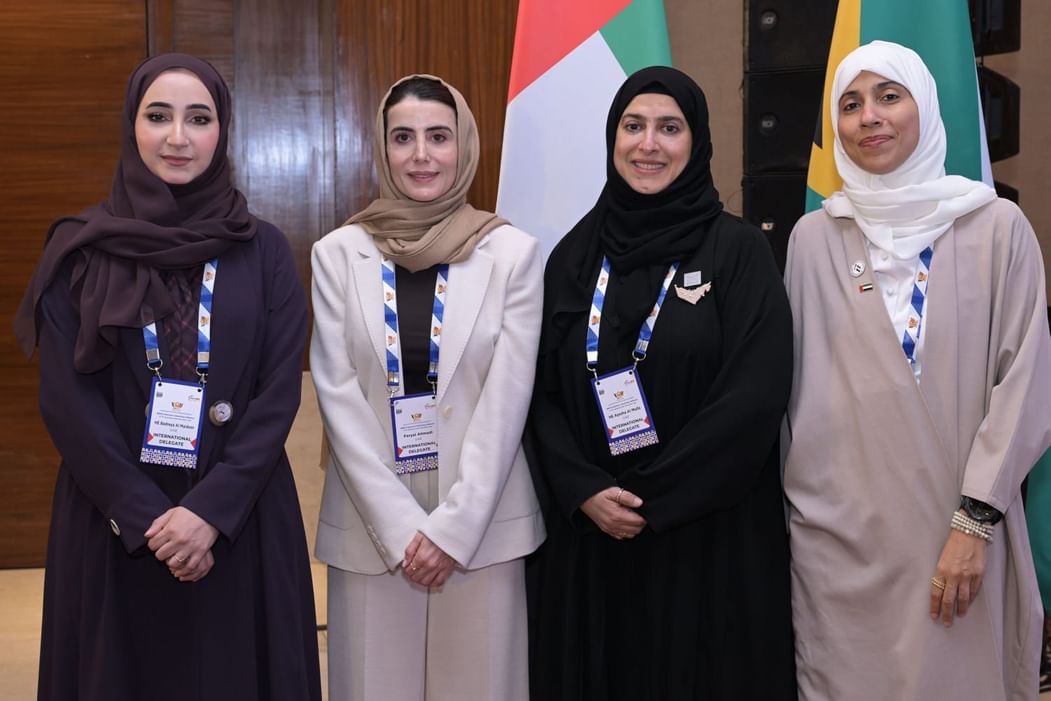
The UAE Chapter of the BRICS Women’s Business Alliance is chaired by Feryal Ahmadi, Deputy CEO and Chief Operating Officer of DMCC.
Its leadership also includes Ayesha Al Mulla, Chairwoman of the UAE Businesswomen Council; Badreya Al Maidoor, Assistant Undersecretary at the Ministry of Economy and Tourism; Prof. Dr. Hoda Alkhzaimi, National Expert in Advanced Sciences and the Future Economy; Dr. Ibtisam Al Bastaki; and Abeer Al Ameeri of the Sharjah Entrepreneurship Center.
Together, they represent sectors ranging from tourism and healthcare to innovation, entrepreneurship, creative industries and the future economy.
Ahmadi, Al Mulla, Al Maidoor and Alkhzaimi represented the UAE during the programme in New Delhi, while other members continued to contribute through the Alliance’s specialised working groups.
Turning international networks into real business
One of the UAE Chapter’s main priorities is to transform international connections into practical economic opportunities.
Ahmadi said the BRICS Women’s Business Alliance could help connect entrepreneurs with businesses, investors and markets across the participating economies.
The UAE’s own position as an international business and investment hub gives it an important role within that network.
Rather than simply introducing entrepreneurs to one another, the objective is to create partnerships capable of producing real trade, investment and market expansion.
Women entrepreneurs need access to global markets
Ayesha Al Mulla highlighted the importance of giving women access to more than funding alone.
International networks can also provide expertise, business partners, successful policy models and knowledge from other markets.
She argued that the success of such programmes should ultimately be measured through results: how many businesses enter new markets, how much investment is generated and how many long-term commercial partnerships are created.
For women-led companies in the UAE, that approach could open opportunities across an increasingly diverse group of BRICS economies.
From local businesses to international companies
Badreya Al Maidoor focused on the importance of equipping women with the knowledge, confidence and capital needed to build sustainable businesses.
The goal, she said, should not end with helping women establish companies locally.
Entrepreneurs should also have the ability to expand across borders, access international value chains and compete in global markets.
With BRICS now bringing together 11 economies with very different industries, consumer markets and areas of expertise, the network creates significant potential for SMEs looking beyond their home countries.
Women should help build the economies of the future
Prof. Dr. Hoda Alkhzaimi called for an even broader definition of economic empowerment.
She argued that women should not only participate in established sectors, but also become founders, investors, innovators and decision-makers in emerging industries.
That means creating opportunities in fields connected to technology, advanced science, creative industries and other areas expected to shape future economic growth.
Alkhzaimi also highlighted the value of looking at BRICS as an interconnected economic ecosystem.
One market may provide talent, another investment, another scientific expertise and another infrastructure capable of helping a company scale.
Connecting those resources, she said, could create new economic value across borders.
Building opportunities for the next generation
Another important theme was the need to create an economic foundation that future generations of women can build upon.
Rather than every generation starting from zero, younger entrepreneurs should be able to benefit from the networks, knowledge, capital and institutions developed by those who came before them.
This approach would turn women’s economic empowerment from a series of individual success stories into a more permanent business infrastructure.
For the UAE delegation, that long-term perspective is particularly important as more Emirati women enter entrepreneurship, investment, technology and senior leadership.
New initiatives for women-led businesses
The UAE Chapter is also working on a pipeline of programmes covering areas including financial literacy, investment readiness, talent development, women’s health, intellectual property, agricultural market access and start-up acceleration.
These initiatives are intended to help women move from developing an idea to raising capital, building partnerships and eventually entering international markets.
The delegation also participated in discussions across the Alliance’s working groups and contributed to wider conversations around future cross-border cooperation.
UAE aims to turn representation into economic impact
The UAE’s participation in the New Delhi summit reflects a wider shift in how women’s success in business is being measured.
Representation remains important, but the next stage is increasingly about economic impact: companies built, capital raised, markets entered and businesses expanded.
By using platforms such as the BRICS Women’s Business Alliance, the UAE is positioning itself as a bridge between entrepreneurs, investors and opportunities across multiple international markets.
The ambition is not simply to place more women in business — but to give them the resources and connections needed to build companies that can compete globally.