Tim Clark says Dubai will emerge stronger after overcoming challenges
Emirates president Sir Tim Clark believes Dubai will emerge “stronger and better” from its current challenges, predicting the city could become an international example of how to adapt, recover and continue growing.
Speaking at the Future Hospitality Summit World, Clark highlighted Dubai’s ability to respond quickly to change and credited the emirate’s direct approach to leadership and long-term development.
Dubai could become a global example
Clark said that if Dubai continues building on the progress it has made over the past several years, the rest of the world will pay even closer attention to what is happening in the emirate.
He believes Dubai has the potential to become a “beacon of example” for other global cities, pointing to the speed at which major projects and economic strategies can be implemented.
His comments reflected confidence that the emirate’s long-term growth story remains intact despite the challenges facing aviation, tourism and the wider global economy.
Tim Clark receives lifetime achievement award
Clark was speaking after receiving the FHS Lifetime Achievement Award, recognising his contribution to transforming Emirates into one of the world’s most recognisable airline brands.
He has played a central role in the airline’s international expansion and the development of Dubai into a major global aviation hub.
Reflecting on Emirates’ growth, Clark said the scale the airline has reached was difficult to imagine during its earlier years.
By 2015, Emirates had already developed into a truly global carrier, while its fleet and international network continued expanding far beyond initial expectations.
Emirates has major plans ahead
Clark said the airline continues to have “great plans” for the future, with the development of Al Maktoum International Airport expected to play an important role in its next stage of growth.
The airport is being positioned as a central part of Dubai’s long-term aviation strategy, with Emirates eventually expected to shift its operations there as the new hub expands.
Clark said the project would take the airline “to another level”, creating additional capacity for future passenger growth and international connectivity.
Emirates network continues to recover
Emirates is currently operating at around 93 per cent capacity, while approximately 98 per cent of its network is fully operational.
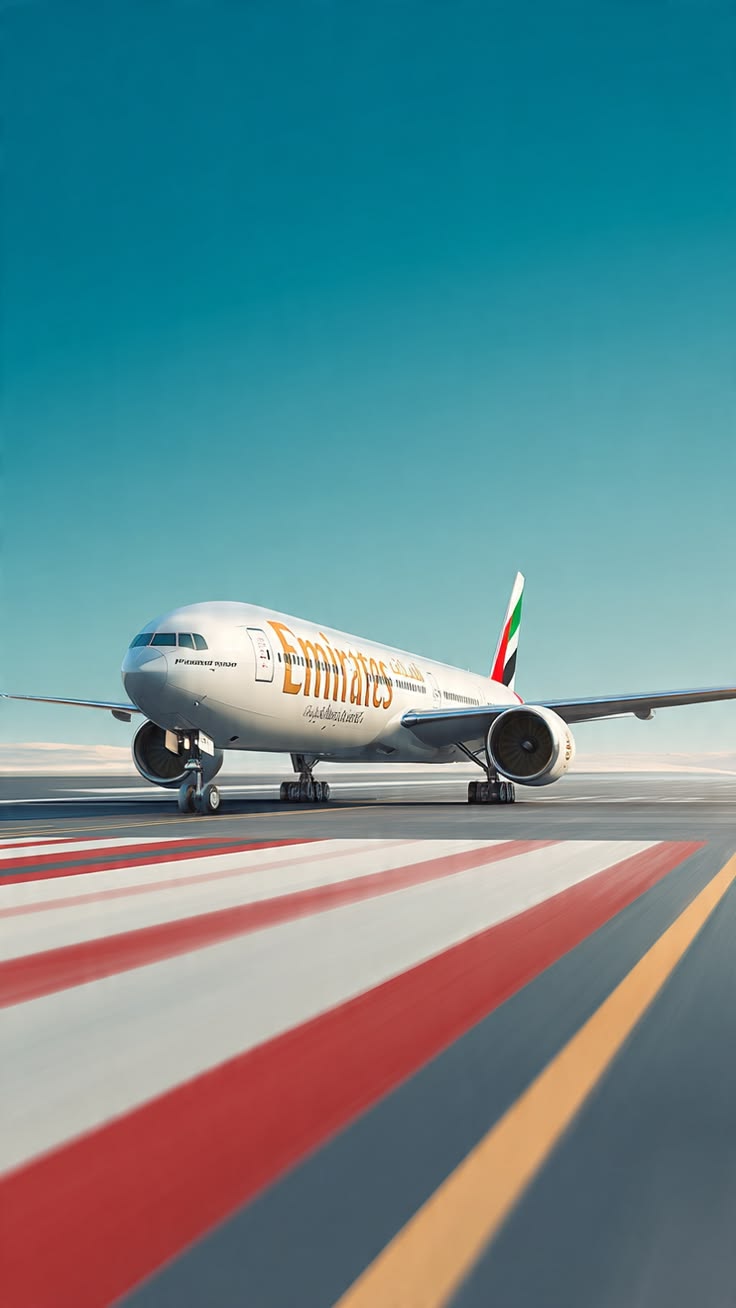
The airline’s fleet includes Airbus A380s and A350s alongside Boeing wide-body aircraft, giving Emirates one of the most recognisable long-haul fleets in international aviation.
The recovery of its network has also reinforced Dubai’s position as a major connection point between Europe, Asia, Africa and the Americas.
From airline growth to Dubai’s wider transformation
Emirates and Dubai have developed alongside each other for decades.
The airline’s international expansion helped bring millions of visitors and business travellers through the emirate, while Dubai’s tourism, hospitality and real estate sectors helped create demand for an increasingly large global network.
That relationship remains central to the city’s future strategy.
With Al Maktoum International Airport, continued tourism expansion and new hospitality developments planned for the coming years, Clark believes Dubai still has significant room to grow.
For one of the most influential figures in the UAE aviation industry, the current period is not the end of Dubai’s growth story — but another stage in its evolution.
And if the city continues responding to challenges with the same speed and ambition, Clark believes Dubai could emerge stronger than before.