


Yangwang U9 Xtreme reaches 503.17kph in Abu Dhabi record run
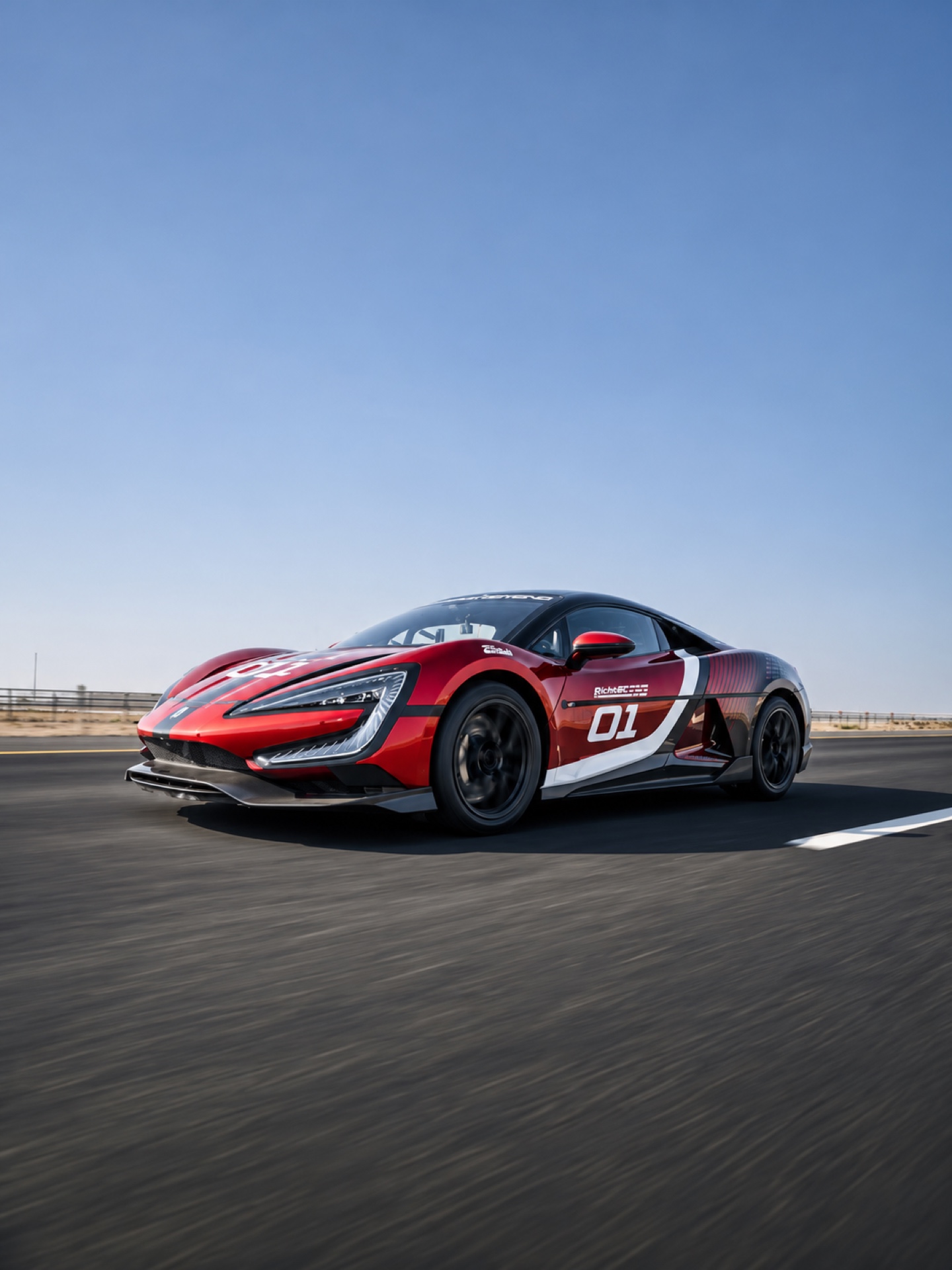
A stretch of desert highway in Abu Dhabi has become the setting for an extraordinary automotive achievement. The Yangwang U9 Xtreme, an all-electric hypercar from BYD’s luxury brand, reached 503.17kph during a controlled speed attempt in Al Dhafra.
German racing driver Marc Basseng was behind the wheel for the record-breaking run on November 1, 2026. The attempt took place on a closed section of Sheikh Khalifa bin Zayed International Road, the E11, with arrangements coordinated with local authorities.
The result earned two Guinness World Records and surpassed the same model’s previous benchmark of 496.22kph, achieved in Germany in September 2025.
Two records beyond the 500kph mark
The U9 Xtreme secured the titles for the highest speed achieved by a production car in a single-direction run and the highest speed achieved by an electric production car in the same category.
The distinction matters: these records measure peak speed in one direction. They follow a different testing format from records based on runs in opposite directions and a calculated average.
The speed was independently checked using a calibrated VBOX measurement system, with an FIA representative reviewing the data and providing written confirmation as part of the verification process.
Four runs on an Abu Dhabi highway
Authorities closed a 10-kilometre section of the E11 for the attempt, with the trial using seven kilometres of that route. The setting presented a different challenge from the dedicated automotive testing facility used for the earlier German record.
Basseng completed four runs across two days. The first two, on October 31, produced a maximum speed of 490kph, leaving the team short of its target.
Engineers then worked on the car’s preparation and settings. Adjustments included the rear-wing angle, suspension response and tyre pressures, alongside procedures to bring the battery and motors to suitable operating temperatures before each run.
Two further attempts followed on November 1. The first confirmed improvements, while the second delivered the final figure of 503.17kph.
Preparing the road also required close attention. After sweeping the surface, the team inspected the route for debris, including small wire fragments that cleaning brushes could leave behind.
The engineering behind the speed
The U9 Xtreme uses four independent electric motors producing more than 3,000 metric horsepower, supported by a 1,200-volt electrical architecture.
Its systems include advanced torque vectoring, which controls how driving force is distributed between the wheels, and active suspension designed to maintain stability at high speed.
Specialised high-performance tyres were developed with Giti Tire. Battery and thermal-management technology also play an important role in supporting the demands placed on the car during extreme-performance driving.
The overnight changes underline how closely the result depended on the complete package: power, aerodynamics, suspension, tyres and preparation all contributed to the successful run.
From a German test track to Al Dhafra
Basseng had also driven the U9 Xtreme during its previous record attempt at ATP Papenburg in Germany. Returning to the wheel in Abu Dhabi meant taking that experience into a different environment, where the road surface required its own approach.
Reflecting on the achievement, he emphasised the importance of precision, stability and confidence in the car, crediting the engineering team behind the attempt.
The hypercar’s performance record also includes a 6-minute, 59.157-second lap of Germany’s Nürburgring Nordschleife. In Al Dhafra, its latest milestone came on a long stretch of highway, where the team added another 6.95kph to its previous top-speed benchmark.