


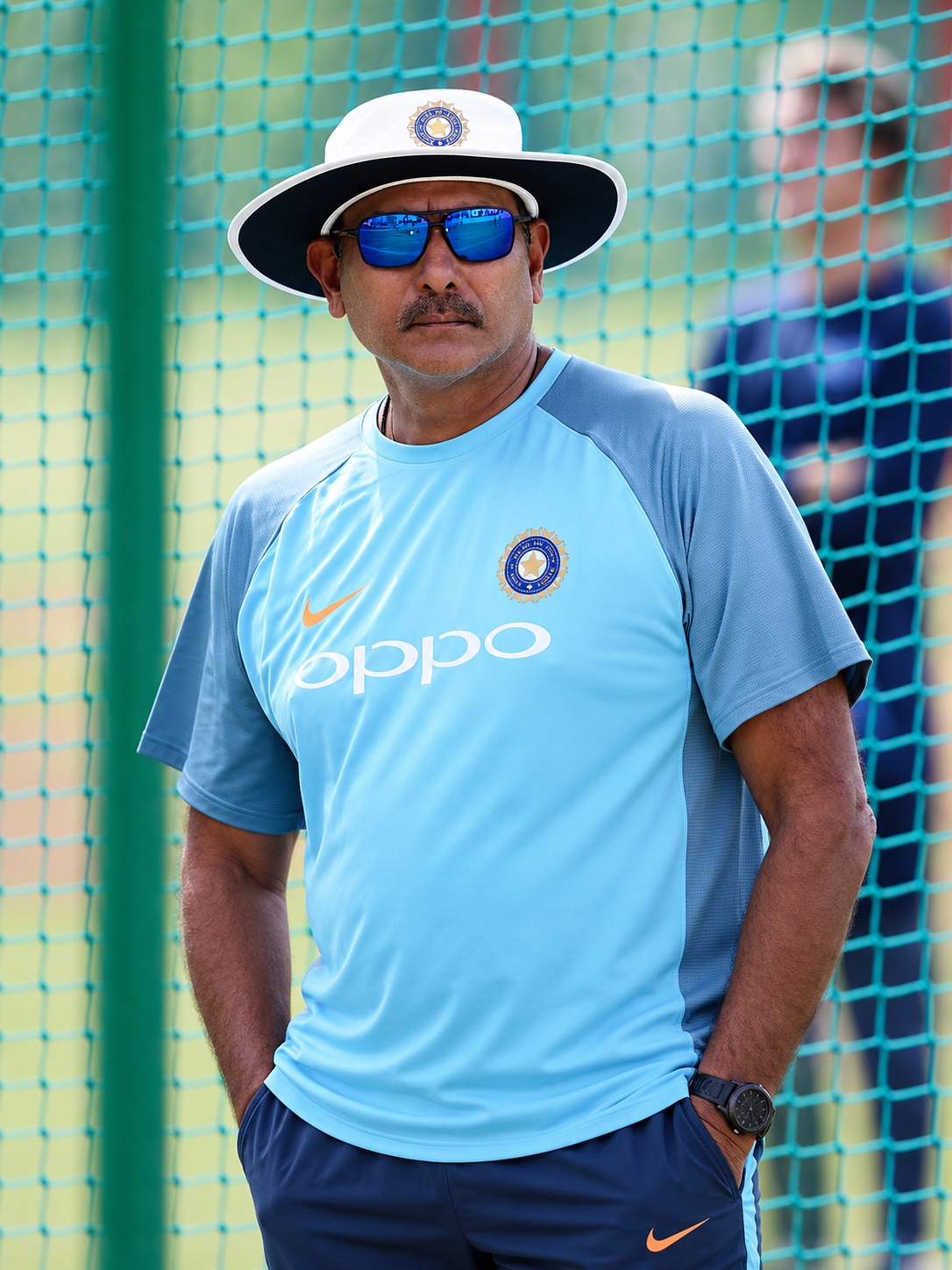
Ravi Shastri reflects on 45 years of Dubai’s transformation
When Ravi Shastri first visited the UAE in 1981, the journey between Sharjah and Dubai passed through stretches of desert. He had arrived to play an exhibition cricket match, beginning a relationship with the country that has lasted 45 years.
Today, the former India captain and head coach sees Dubai’s development as a lesson in ambition and the willingness to evolve. Having watched both the city and Indian cricket change dramatically, he recognises a common thread: progress depends on continuing to build on success.
His latest visit brought him back in a different role, as brand ambassador for a partnership between TheBlock. and CENTURY 21 UAE & India, connecting property developers and investors around the future of real estate tokenisation.
Watching Sheikh Mohammed’s vision take shape
Shastri remembers a Dubai centred largely on Bur Dubai, with open desert where much of the modern city now stands.
He credits its transformation to the vision of Sheikh Mohammed bin Rashid Al Maktoum, Vice-President and Prime Minister of the UAE and Ruler of Dubai, particularly his early recognition of the city’s potential as a financial hub.
For someone who has returned regularly over more than four decades, that change has unfolded through personal experience: familiar journeys, new neighbourhoods and an expanding sporting calendar.
Shastri also remains confident in Dubai’s resilience. Despite recent regional disruption, he believes the city has the ability to recover quickly.
What Dubai and the IPL have in common
Shastri draws a parallel between Dubai’s development and the way the Indian Premier League changed cricket after its launch in 2008.
“The game has to evolve; otherwise, it will stagnate,” he said.
In his view, the IPL helped shape the global growth of T20 cricket. Dubai’s willingness to develop new industries and approaches reflects a similar instinct.
He sees the exploration of property tokenisation as another stage in that process, following the expansion of the city’s real estate sector.
It is this continuing movement that interests him: established strengths creating a foundation for the next idea.
A sporting destination with global connections
Dubai’s sporting life is another part of its appeal for Shastri.
He points to the opportunity to watch golf, cricket and tennis, alongside Formula One in Abu Dhabi, as evidence of the UAE’s breadth as an international sporting destination.
A keen golfer himself, he admires the quality of Dubai’s courses and the ambition behind their development.
The city’s connectivity also matters to someone whose career has involved constant travel. From Dubai, he can reach major cricketing destinations across India, South Africa and New Zealand, while remaining among a diverse international community.
The pressure of leading India
Shastri’s reflections on transformation also draw on his own career as a World Cup-winning player, broadcaster and coach.
Of those roles, he considers coaching the most demanding.
As a player, he could influence a match with bat or ball. In broadcasting, he controlled his contribution through the microphone. Coaching required him to prepare the team and then watch decisions unfold beyond the boundary.
The pressure to win was relentless, although achievements such as India’s 2021 Test series victory in Australia, sealed in Brisbane by a depleted side, made the responsibility deeply rewarding.
He remains outspoken about the game. Shastri believes Mohammed Shami should be in India’s team and ranks him among the country’s three or four greatest fast bowlers.
The Dubai collection that still moves him
One of Shastri’s most personal connections to Dubai is Shyam Bhatia’s private cricket museum.
He has known the businessman and collector since his earliest visits to the city and admires the dedication behind its collection of signed memorabilia.
“It takes that kind of commitment, passion, hunger and patience,” he said.
For Shastri, visiting the museum brings cricket’s history back through the objects and stories Bhatia has preserved. After decades spent playing, coaching and describing the sport, those encounters still have the power to move him.