


Mohammad Al Mulla explores the future of printing organs in space
Emirati astronaut Mohammad Al Mulla has highlighted a potential application of space research: producing biological structures that could one day help patients waiting for transplants.
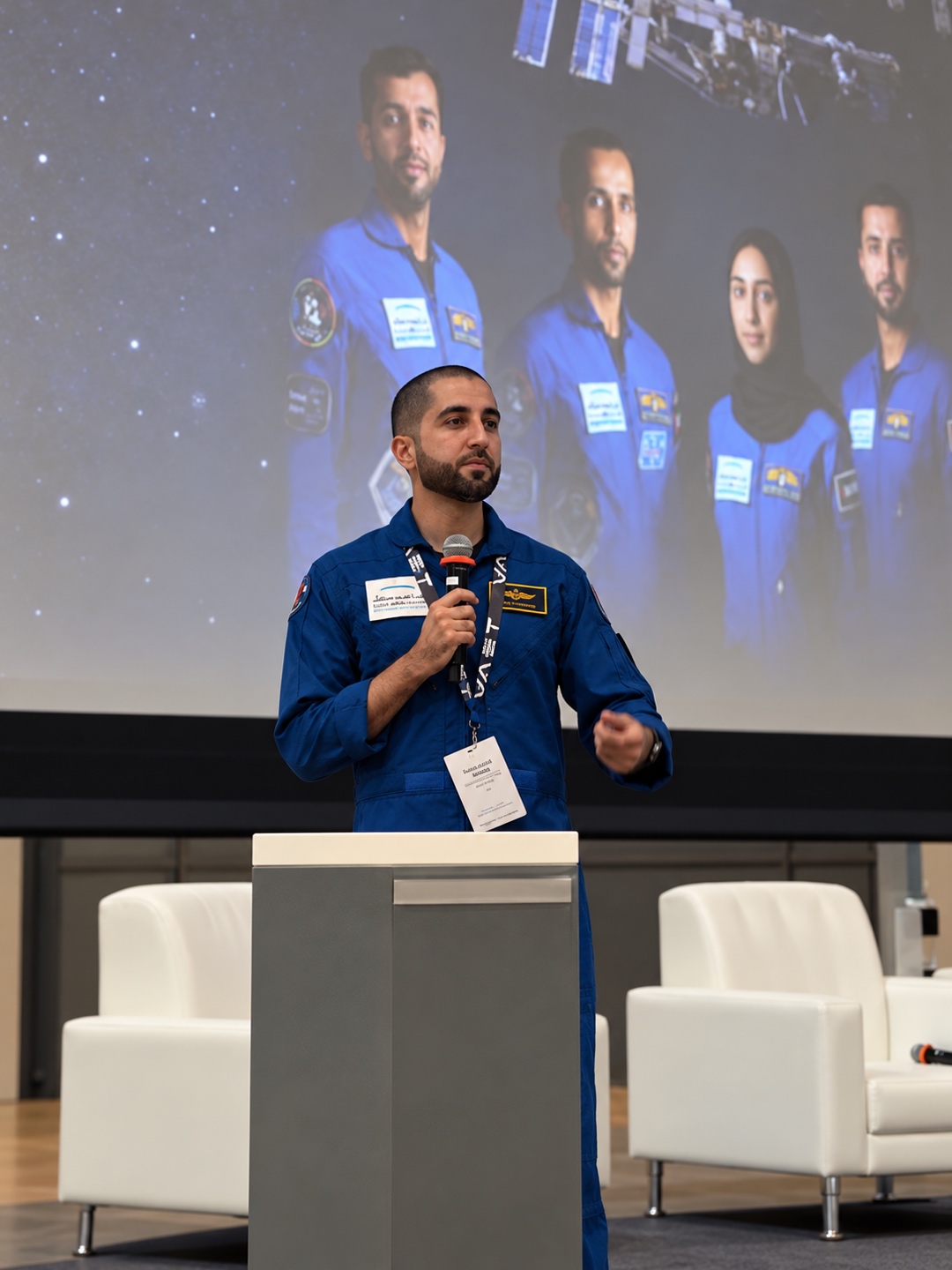
Speaking at an event hosted by Masdar City and space company Vast in Abu Dhabi on October 27, Al Mulla discussed how 3D bioprinting in microgravity could open new possibilities for researchers.
The prospect remains a long-term research goal. Producing complete organs suitable for transplantation is still a future possibility, and no timetable for achieving it was established during the discussion.
Why microgravity interests researchers
Al Mulla pointed to the need for donor organs, including hearts, lungs, livers and kidneys, as a reason to investigate new approaches to producing biological materials.
On Earth, gravity influences how material is deposited during the layer-by-layer printing process. In microgravity, scientists can explore how those structures form under different conditions.
His interest centres on what that difference might eventually make possible for patients, connecting research in orbit with medical needs on the ground.
Tissue experiments are already taking place in orbit
Research into bioprinting biological tissue aboard the International Space Station is already under way.
NASA has reported experiments involving cartilage tissue, including work on a human knee meniscus. Researchers are investigating whether microgravity can help produce tissue with properties that could eventually support new treatments.
These experiments provide a more immediate focus than complete organ production: understanding what can be printed, how it behaves and whether the resulting material could have a practical medical application.
Sunita Williams sees an opportunity to scale up
Joining the discussion, former NASA astronaut Sunita Williams, now an astronaut adviser to Vast, explained how commercial space stations could expand biological research.
During her missions, Williams worked on experiments involving stem cells, DNA sequencing and capillary flow. Much of that work required careful manual handling, limiting how many experiments astronauts could complete.
She described procedures in which processing a single plate by hand could take half a day.
Automation could help researchers move towards more repeatable processes, potentially making it easier to grow stem cells and organoids—small, simplified models of organs made from cells.
Williams sees commercial stations as an opportunity to build on the ISS’s experience, with biological materials potentially produced in orbit and returned to Earth.
Connecting space ambitions with life on Earth
The discussion also highlighted the practical challenges behind research in orbit.
Equipment must be secured to prevent it floating away, while liquids can move along surfaces in unexpected ways and disrupt experiments. Learning to manage those conditions is part of developing reliable, automated processes.
For Al Mulla, who has completed years of astronaut training but has not yet flown to space, the conversation connected his future ambitions with work already taking place aboard the ISS.
Printing transplant-ready organs remains an aspiration. The research being explored today concerns the tissues, tools and processes that could help scientists understand whether that aspiration can eventually become a practical benefit for patients.