



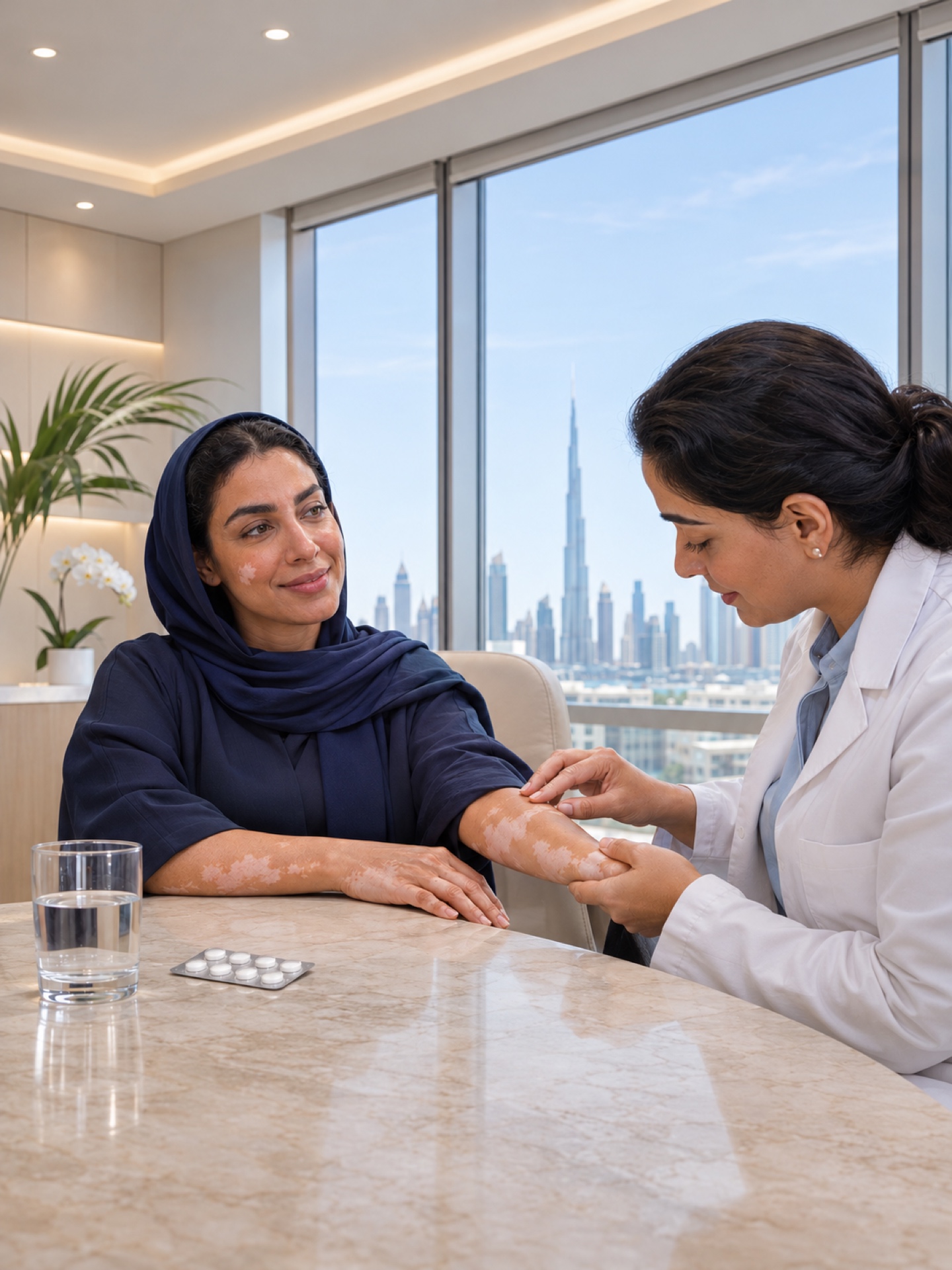
UAE launches new oral treatment for vitiligo at Dubai dermatology conference
The UAE has marked the official launch of a new oral treatment for non-segmental vitiligo, expanding the options available to patients living with a condition that affects skin pigmentation and can have a significant impact on everyday confidence.
The launch took place alongside the 10th Emirates Dermatology Conference at InterContinental Dubai – Festival City. The UAE is the first country to approve the therapy, adding a regulatory milestone to the gathering’s programme of scientific discussions and professional training.
The ceremony was attended by Sheikha Dr. Noura Al Qasimi, President of the Emirates Medical Association, and Dr. Ayman Alnaeem, President of the Dermatology Division and the conference.
A new option within specialist care
The oral therapy is intended for patients with non-segmental vitiligo and is available only on prescription. A specialist determines whether it is appropriate for an individual patient, as well as the dosage and duration of treatment.
Its introduction adds to the range of approaches clinicians can consider when developing a treatment plan. The choice of therapy remains dependent on a patient’s diagnosis and individual circumstances.
At the launch, Sheikha Dr. Noura Al Qasimi highlighted the importance of community health and quality of life within the UAE’s development priorities, linking advances in healthcare with their practical impact on people.
Understanding the condition
Vitiligo is a chronic autoimmune condition in which the immune system attacks melanocytes, the cells responsible for producing pigment. This causes affected areas of skin to lose their natural colour.
The patches can appear on different parts of the body, including the hands, feet, arms and face. Changes can also affect hair in areas where pigmentation is lost.
In the common non-segmental form, patches often develop symmetrically on both sides of the body. Segmental vitiligo follows a different pattern, typically affecting one area or side.
Vitiligo can develop at any age, although it often begins before the age of 20. Family history can play a role, and the condition may occur alongside other autoimmune disorders.
Care beyond visible skin changes
The effects of vitiligo can extend beyond pigmentation. Some people experience distress about changes in their appearance, with consequences for self-esteem, relationships and quality of life.
Treatment aims can include slowing or stopping progression and helping restore colour to affected areas. Responses vary between patients and between different parts of the body, and improvement can take time.
Existing approaches include medicated creams, phototherapy and, in selected circumstances, surgical techniques. Emotional support can also form part of care, helping patients navigate the personal and social challenges associated with the condition.
Dubai brings dermatology specialists together
The conference brought together more than 500 physicians and specialists from around the world to discuss developments across dermatology, laser treatments and aesthetic medicine.
Its scientific programme included lectures, practical workshops, live demonstrations and discussions of clinical cases. Topics ranged from eczema and acne to skin cancer, infectious diseases and inflammatory skin conditions.
Artificial intelligence applications, clinical imaging and emerging therapies were also on the agenda, alongside developments in biological treatments for psoriasis.
The fifth Residents’ Academy formed part of the educational programme, offering practical training and mentorship for doctors developing their careers in dermatology. An accompanying exhibition featured more than 30 local and international companies presenting medical devices and technologies used in diagnosis and treatment.