


Sheikh Khaled and King Abdullah launch $2.3 billion Jordan railway project
Sheikh Khaled bin Mohamed bin Zayed Al Nahyan and Jordan’s King Abdullah II have launched a $2.3 billion railway project that will connect the Port of Aqaba with some of Jordan’s most important mining centres.
The Aqaba-Al Shidiya-Maan Railway Project will create a 403-kilometre transport network designed to strengthen Jordan’s mining industry, lower logistics costs and improve connections between production centres and international markets.
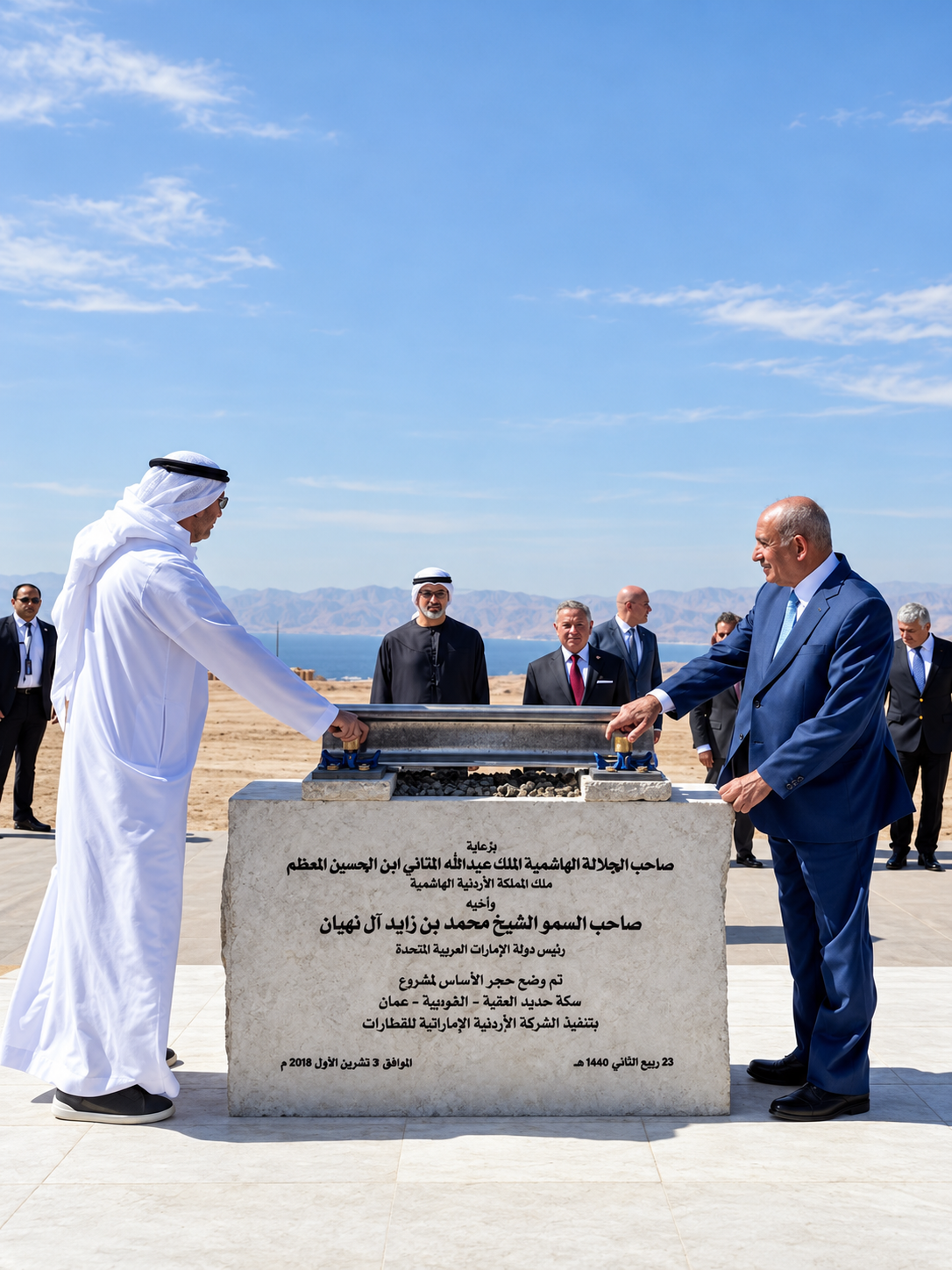
A ground-breaking ceremony for the project was held in Jordan, marking the beginning of construction on one of the most significant recent infrastructure partnerships between the UAE and Jordan.
A 403-kilometre railway across southern Jordan
The new railway will connect the Port of Aqaba with mining centres in Al Shidiya and Ghor Al Safi, creating a direct route for transporting phosphate and potash to export terminals.
Once operational, the network is expected to carry around 16 million tonnes of minerals every year.
The project will include approximately 55 bridges, six tunnels and other major engineering structures across its route.
Construction is expected to take around five years.
Sheikh Khaled joins King Abdullah in Aqaba
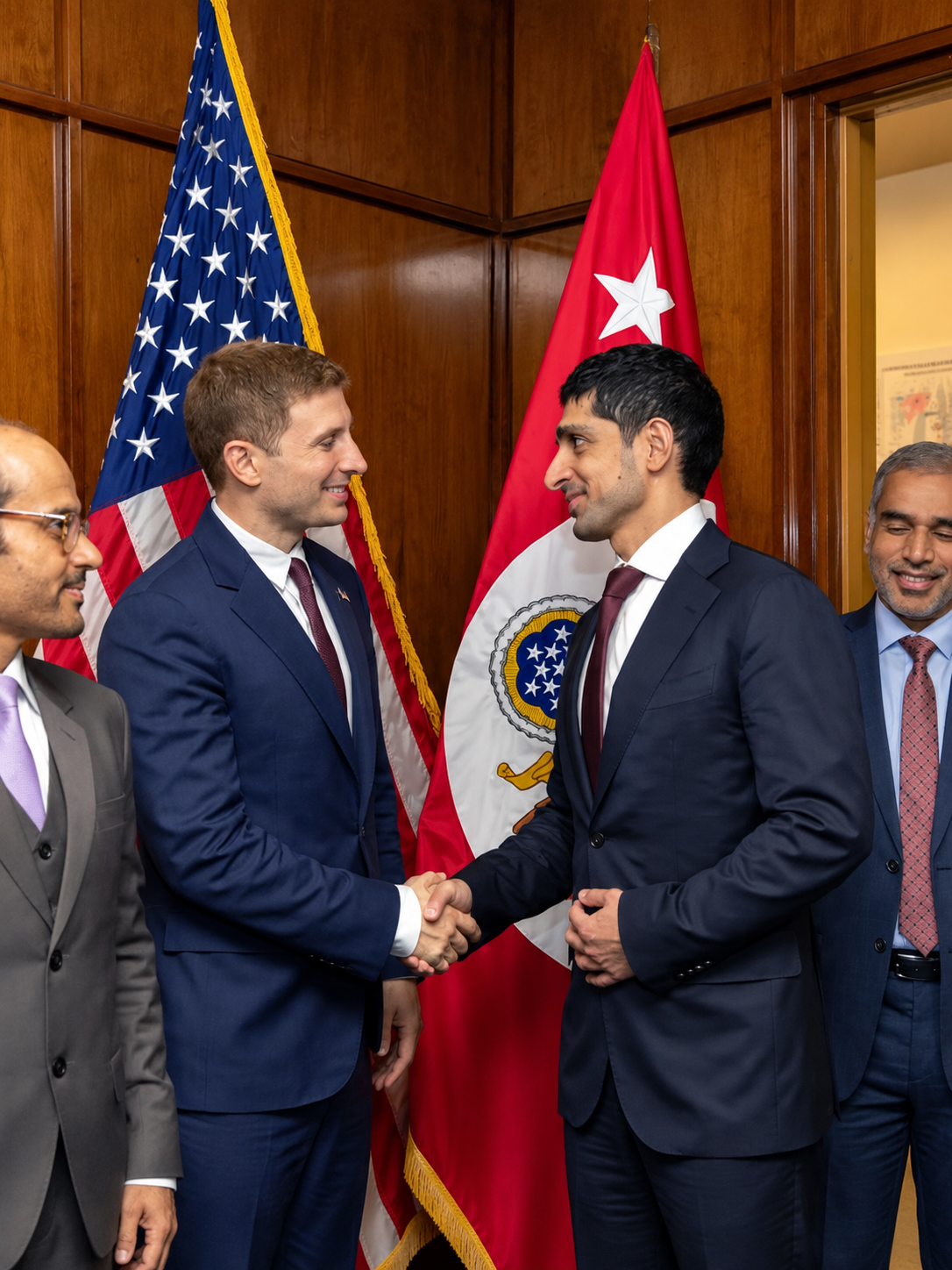
Sheikh Khaled, Crown Prince of Abu Dhabi and Chairman of the Abu Dhabi Executive Council, travelled to Jordan for the launch and was received by King Abdullah at King Hussein International Airport in Aqaba.
During the visit, Sheikh Khaled also met officials involved in delivering the railway.
He highlighted the project as another example of the close relationship between the UAE and Jordan and their commitment to expanding cooperation in strategic economic sectors.
The railway agreement was originally signed in July, with Sheikh Mansour bin Zayed Al Nahyan, Vice President, Deputy Prime Minister and Chairman of the Presidential Court, present.
UAE and Jordan share investment
The project is being developed through the Jordan-UAE Railway Company as a 50-50 joint venture.
The UAE side is represented by sovereign investment company L’imad Holding.
Jordanian partners include the Jordan Phosphate Mines Company, Arab Potash Company, Musahamat and the country’s Social Security Fund.
The structure gives both countries an equal role in the development and operation of the railway.
5,000 jobs expected
Beyond transportation, the railway is expected to have a wider economic impact across southern Jordan.
Around 5,000 jobs could be created as the project moves through construction and into operation.
Companies working in engineering, construction, technology, logistics, maintenance and supporting industries are also expected to benefit.
The railway could reduce mineral transportation costs by approximately $40 million annually, improving the competitiveness of Jordanian phosphate and potash exports.
Replacing trucks with rail
At present, potash from Ghor Al Safi is largely transported to Aqaba by road, while phosphate exports from Al Shidiya have relied on older transport infrastructure.
The new railway is designed to move a large proportion of that cargo directly by train.
This could reduce pressure on roads while making mineral transportation faster and more efficient.
Direct rail access to Aqaba could also strengthen Jordan’s connection to regional and global markets by simplifying the journey between mines and shipping terminals.
UAE expands its regional railway investments
The Jordan project adds to a growing portfolio of railway developments involving the UAE.
At home, the Etihad Rail network stretches approximately 1,200 kilometres across all seven emirates and supports both freight and passenger transport.
The UAE is also developing Hafeet Rail, a cross-border railway linking Abu Dhabi with Sohar in Oman.
The country is additionally part of wider international transport initiatives designed to improve trade connections between Asia, the Middle East and Europe.
A new chapter in UAE-Jordan cooperation
For both countries, the Aqaba-Al Shidiya-Maan railway is intended to go beyond a traditional infrastructure project.
By connecting mines directly with one of the region’s important ports, the development could strengthen Jordan’s export economy while opening new opportunities for businesses across southern parts of the country.
With $2.3 billion in investment, 403 kilometres of track and thousands of expected jobs, the project also demonstrates the increasing role of UAE investment in large-scale infrastructure beyond its borders.
For Sheikh Khaled and King Abdullah, the ground-breaking ceremony marks the start of a project designed to turn the long-standing UAE-Jordan relationship into tangible economic development.